
Last updated: May 2026
This page contains affiliate links. As an Amazon Associate, HydraulicToolsShop.com earns from qualifying purchases at no extra cost to you.
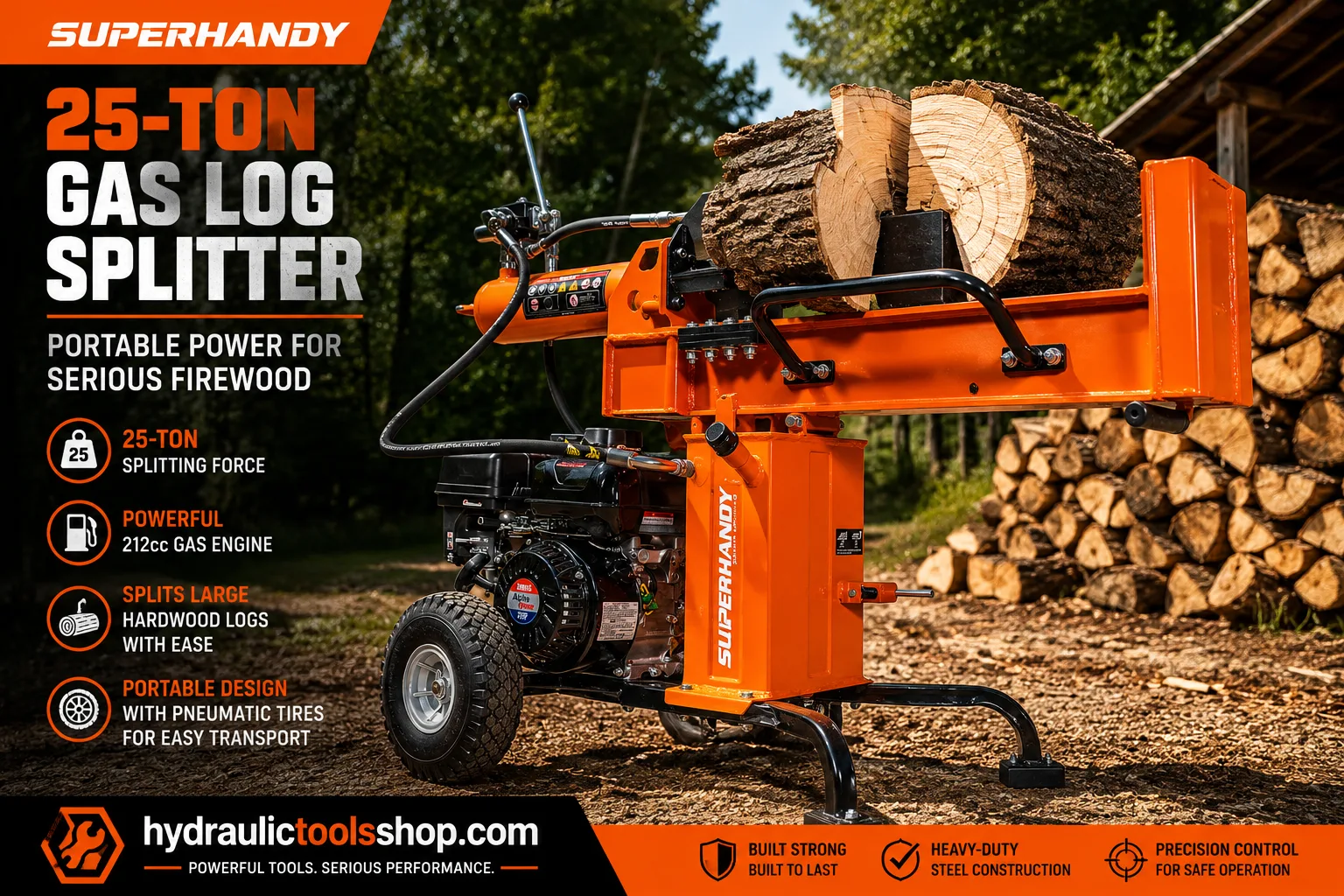
Score based on splitting capacity for intended use, ease of operation, value for money, owner feedback patterns, and long-term reliability signals.
Who Actually Needs a Gas Log Splitter
Before reviewing the SuperHandy specifically — the more useful question is whether a gas splitter is the right category for your situation at all.
The case for staying electric: quieter, lower maintenance, no fuel storage, works in a garage without ventilation concerns. A 6.5-ton electric handles softwood well and costs $300 to $340.
The case for going gas: you split oak, hickory, or dense hardwood regularly. Your wood source produces large diameter rounds above 10 inches consistently. You split on a rural property without convenient power access. You process multiple cords per season and need a machine that works at the pace you set rather than the pace the motor allows.
Watch It Work
What to Watch For
Pay attention to the vertical operation demonstration. Switching from horizontal to vertical mode and splitting a large round without lifting it onto the beam is where the SuperHandy’s design advantage over fixed-horizontal gas splitters shows clearly.
Watch the 12-second cycle in real conditions — not on a clean straight-grained piece but on something knotty or irregular. The Bucher gear pump maintains consistent pressure through the full stroke regardless of resistance, which is what makes the cycle time reliable rather than optimistic.
Note the folding handle and wheel system during transport. The SuperHandy is designed to move between splitting locations — the video shows how practical that is in a real yard rather than on a flat driveway.
Specs and Infographic
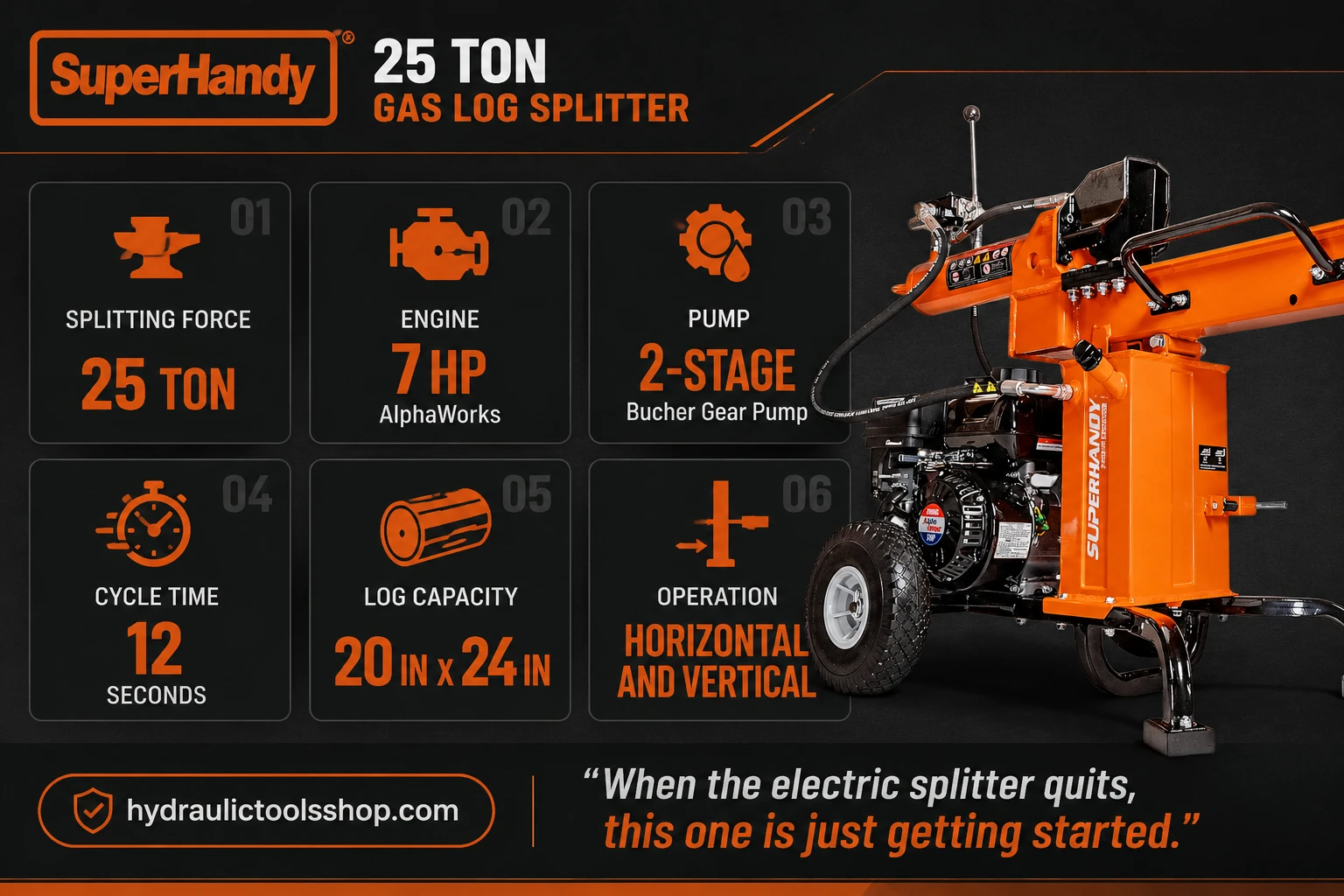
| Splitting Force | Manufacturer-rated 25 ton |
| Engine | 7HP AlphaWorks OHV gas engine |
| Hydraulic Pump | 2-stage Bucher gear pump |
| Cycle Time | ~12 seconds |
| Log Capacity | 20 in length x 24 in diameter |
| Operation | Horizontal and vertical |
| Wheels | 10 in polyurethane |
| Handle | Ergonomic folding |
| Weight | ~90 lbs per manufacturer listing — confirm against current spec sheet before ordering |
| Hydraulic Fluid | AW32 recommended — not included |
| Price | ~$1,093.82 |
Amazon Associate link
The Engine and Pump — Why These Two Matter Together
Most budget gas log splitters use a basic single-stage gear pump paired with a generic OHV engine. The SuperHandy uses a 7HP AlphaWorks engine — AlphaWorks is used across multiple outdoor power products and is paired here with a 2-stage Bucher gear pump system — paired with a 2-stage Bucher gear pump.
The 2-stage Bucher pump is the component worth understanding. In stage one it moves hydraulic fluid quickly to advance the wedge toward the log fast — saving cycle time on the approach. In stage two it shifts to high pressure and lower flow rate when resistance from the wood increases — delivering the full 25 tons of force through the split without motor strain. The result is a faster cycle time than the tonnage rating alone would suggest and more consistent performance on resistant wood than single-stage alternatives.
Vertical Operation — The Feature That Changes the Job
Most home garage log splitters operate horizontally only. You lift the log onto the beam, position it, and split. For a 12-inch pine round this is straightforward. For a 20-inch diameter oak round weighing 80 to 100 lbs — lifting it onto a horizontal beam is the most physically demanding part of the entire splitting session.
The SuperHandy converts to vertical operation by rotating the beam and cylinder assembly. In vertical mode, large rounds sit on the ground under the wedge. The machine comes to the wood rather than the operator lifting the wood to the machine. For anyone regularly splitting large diameter rounds of dense hardwood, this single feature changes the physical experience of the job entirely.
Scorecard
Pros and Cons
What Works
- 25-ton capacity handles oak, hickory, and large diameter hardwood
- 2-stage Bucher gear pump — faster cycle, consistent pressure through split
- Horizontal and vertical operation — large rounds without heavy lifting
- 12-second cycle — fast enough for sustained splitting sessions
- 10-inch polyurethane wheels — moves across grass, gravel, and uneven terrain
- Folding handle — compact for storage and transport
- Relatively portable for a 25-ton gas unit — confirm current weight spec before ordering
What to Watch
- Gas engine — fuel storage, oil changes, seasonal maintenance required
- Loud — not suitable for close suburban settings or early morning use
- Hydraulic fluid not included — fill before first use with AW32
- Non-returnable on Amazon — transportation subject to hazardous materials regulation
- Owner feedback is more limited than the electric alternatives in this silo
- Needs ventilation — cannot be operated in an enclosed garage
Gas log splitter prices vary with fuel equipment demand. Check stock before deciding.
Check Current Price on Amazon See all log splitters →How It Compares
| Splitter | Tons | Power | Cycle | Max Dia. | Vertical | Price |
|---|---|---|---|---|---|---|
| SuperHandy 25-ton | 25 | 7HP gas | 12 sec | 24 in | Yes | $1,093 |
| BILT HARD 25-ton Gas | 25 | 8HP gas | 17 sec | TBC | Yes | $1,399 |
| BILT HARD 6.5-ton Electric | 6.5 | 120V | 18 sec | 9.8 in | No | $319 |
| WEN 56208 Electric | 6.5 | 120V | N/A | 10 in | No | $337 |
Against the BILT HARD 25-ton gas the SuperHandy is $306 cheaper with a faster 12-second cycle versus 17 seconds — on paper, the shorter cycle time could reduce waiting between splits over a sustained session. The BILT HARD has a slightly larger 8HP engine and an 8-inch hardened wedge. Both offer horizontal and vertical operation at 25 tons. The SuperHandy is the better value case at the lower price point. The BILT HARD review covers the differences in full for anyone choosing between the two.
What Owners Report
Owner feedback for the SuperHandy 25-ton is more limited than the electric alternatives in this silo — a smaller purchase base at a higher price point is expected. What exists is consistently positive for the intended use case.
Owners splitting hardwood — oak, hickory, mixed species — report the 25-ton capacity handles the wood without the stalling and incomplete splits that characterise lower-tonnage electric units on dense rounds. The vertical operation feature is mentioned positively by owners processing larger diameter wood, particularly for reducing the physical effort of loading heavy rounds onto a horizontal beam.
The most consistent owner note is the hydraulic fluid omission — several buyers were caught off guard that the fluid is not included and the machine cannot be used immediately out of the box. Budget for a litre of AW32 hydraulic oil before the unit arrives.
Frequently Asked Questions
Sources and transparency: Specifications verified against the SuperHandy Amazon product listing and SuperHandy product documentation. Owner report analysis based on aggregated verified purchase reviews. Engine and pump technical information referenced against manufacturer specifications. Performance assessments based on published specifications and mechanic network feedback — not controlled lab testing. Amazon Associate link used — commissions support this site at no extra cost to you. No payment received from SuperHandy.
Reviewed for HydraulicToolsShop.com by Hank Miller. Updated using owner feedback, product spec changes, and market comparisons. Questions or experience to share — reach Hank via the contact page.

20+ Years • Hydraulics and Heavy Equipment
Hank Miller
Born in Ohio’s Rust Belt. Two decades fixing trucks and heavy gear taught me one thing — good tools keep you safe, bad ones cost you time. I dig into owner data and make the call so you know exactly what you are buying. Read Hank’s full story.