Last updated: May 2026
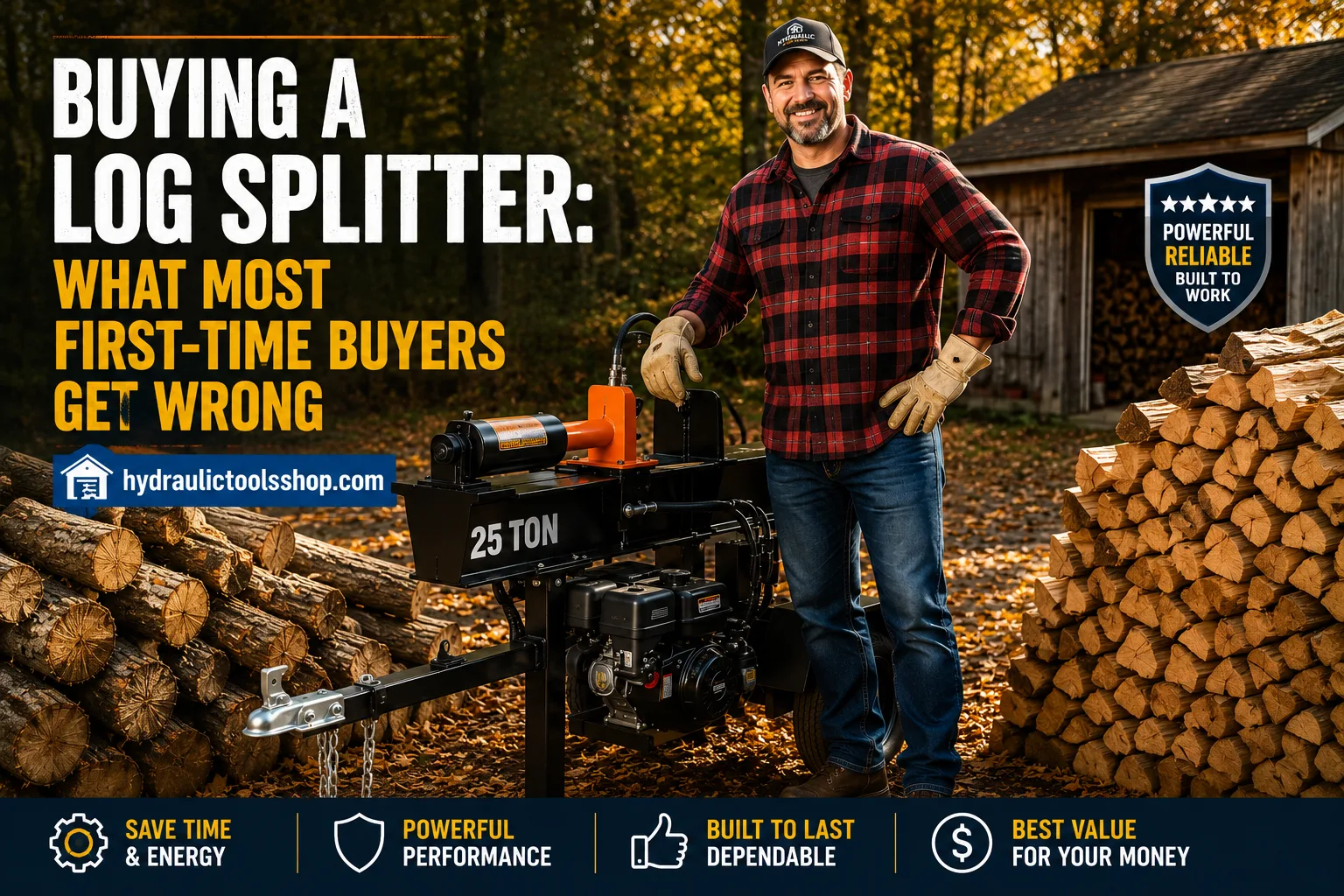
Buying a Log Splitter: What Most First-Time Buyers Get Wrong
Log Splitter Guide • Electric vs Gas vs Manual • Tonnage, Wood Type and Seasonal Use • Hank Miller
The three most common log splitter mistakes happen before the machine even arrives. Wrong tonnage for the wood. Wrong power source for the property. Wrong timing for firewood season. This page covers what to check before you spend anything — so you buy the right machine the first time.
Wrong Tonnage
Buying a 6-ton electric for hardwood that needs 12 tons. The splitter stalls on every log above 8 inches diameter.
Wrong Power Source
Buying gas for a small yard or electric for a remote property with no outlet. The machine works — the situation does not.
Wrong Timing
Ordering in October when firewood season has started and delivery takes two weeks. Split wood needs 6 months to season properly.
Quick Answer — Which Log Splitter Type Is Right for You
| Type | Best For | Tonnage Range | Power | Price Range |
|---|---|---|---|---|
| Electric | Softwood, small to medium logs, suburban use, occasional splitting | 6 to 10 ton | 110V outlet | $150 to $500 |
| Gas | Hardwood, large volumes, remote properties, serious firewood production | 20 to 25 ton | Gasoline engine | $700 to $1,500 |
| Manual / Kinetic | Kindling, small softwood, camping, occasional light use | 1 to 5 ton | Human power | $30 to $150 |
The Three Log Splitter Types — What Each One Actually Does
Most buying guides treat these as options on a price spectrum. They are not. Each type has a specific use case it handles well and situations where it is genuinely the wrong tool. The price difference between a $200 electric and an $800 gas splitter is not the reason to choose one over the other. The wood is.
Electric Log Splitter
- 6 to 10 tons of splitting force
- Runs on 110V standard household outlet
- Quiet — suitable for suburban yards
- Low maintenance — no fuel mixing or carburettor service
- Handles softwood and smaller diameter hardwood cleanly
- Limited by cord length and outlet availability
Not for: Large diameter hardwood, green wood above 8 inches, or remote properties without power.
Gas Log Splitter
- 20 to 25 tons of splitting force — handles the hardest hardwoods
- No outlet required — works anywhere
- Faster cycle times than electric — higher volume output
- Handles large diameter and green wood that stops electric units
- Loud — not suitable for close suburban settings
- Requires fuel storage, oil changes, seasonal maintenance
Not for: Small suburban yards, occasional splitting of a few logs, or buyers who want zero maintenance.
Manual / Kinetic Splitter
- 1 to 5 tons — handles softwood kindling and small rounds
- No power source required — fully portable
- Silent — no engine noise
- Compact — stores in a shed corner or car boot
- Zero maintenance — no hydraulics, no fuel
- Physical effort required — not suitable for large volumes
Not for: Hardwood, large diameter logs, or anyone splitting more than a quarter cord per season.
Tonnage — The Number That Matters Most
Tonnage is the splitting force the machine generates. A higher tonnage number means more force through the wedge — which means the ability to split larger diameter logs and denser wood species. This is the spec most first-time buyers underestimate.
The common mistake: buying a 6-ton electric splitter and expecting it to handle seasoned oak or hickory at 14 to 16 inches diameter. A 6-ton unit stalls on those logs. The wood does not split — it grips the wedge. The machine cycles back without completing the split. That is not a defect. It is a capacity mismatch.
| Wood Type | Log Diameter | Min Tonnage Needed | Recommended |
|---|---|---|---|
| Pine, fir, spruce (softwood) | Up to 10 inches | 6 ton | Electric 6 to 8 ton |
| Ash, maple (medium hardwood) | Up to 12 inches | 10 ton | Electric 10 ton or gas 20 ton |
| Oak, hickory (dense hardwood) | Up to 16 inches | 20 ton | Gas 20 to 25 ton |
| Elm, cherry (knotty hardwood) | Any diameter | 25 ton often recommended | Gas 25 ton |
| Mixed wood, unknown species | Up to 12 inches | 20 ton | Gas 20 ton for safety margin |
Wood Type Changes the Calculation Entirely
Two pieces of wood the same size can require completely different splitting force. A 12-inch round of dry pine splits with minimal effort. A 12-inch round of green elm with a knot in it will stop a 10-ton electric unit dead.
The variables that increase required splitting force:
Species density — oak and hickory are significantly denser than pine or fir. The wedge has to displace more fibre per inch of travel. A gas splitter at 20 tons handles both. A 6-ton electric handles only the softer species reliably.
Moisture content — green wood fibres are bound together by moisture. The wedge has to overcome that binding as well as the wood density. Dry seasoned wood of the same species splits with noticeably less force.
Knots and grain direction — a straight-grained log splits cleanly along the grain. A knotty log or one with twisted grain resists splitting in any direction. Elm is notorious for this — knotty or twisted elm rarely splits cleanly regardless of how much force is applied. For knotty elm, 25 ton is often the practical recommendation, though seasoned straight-grained rounds can sometimes split at lower tonnage depending on the wedge design.
Full Comparison Table
| Feature | Electric | Gas | Manual |
|---|---|---|---|
| Splitting force | 6 to 10 ton | 20 to 25 ton | 1 to 5 ton |
| Power source | 110V outlet | Gasoline engine | Human power |
| Noise level | Quiet | Loud | Silent |
| Portability | Limited by cord | Fully portable | Fully portable |
| Maintenance | Low | Medium | None |
| Hardwood capability | Light hardwood only | All hardwoods | Softwood only |
| Volume capacity | Occasional to moderate | High volume | Low volume |
| Green wood | Softwood only | All species | Not recommended |
| Price range | $150 to $500 | $700 to $1,500 | $30 to $150 |
| Best for | Suburban, softwood, occasional | Rural, hardwood, high volume | Kindling, camping |
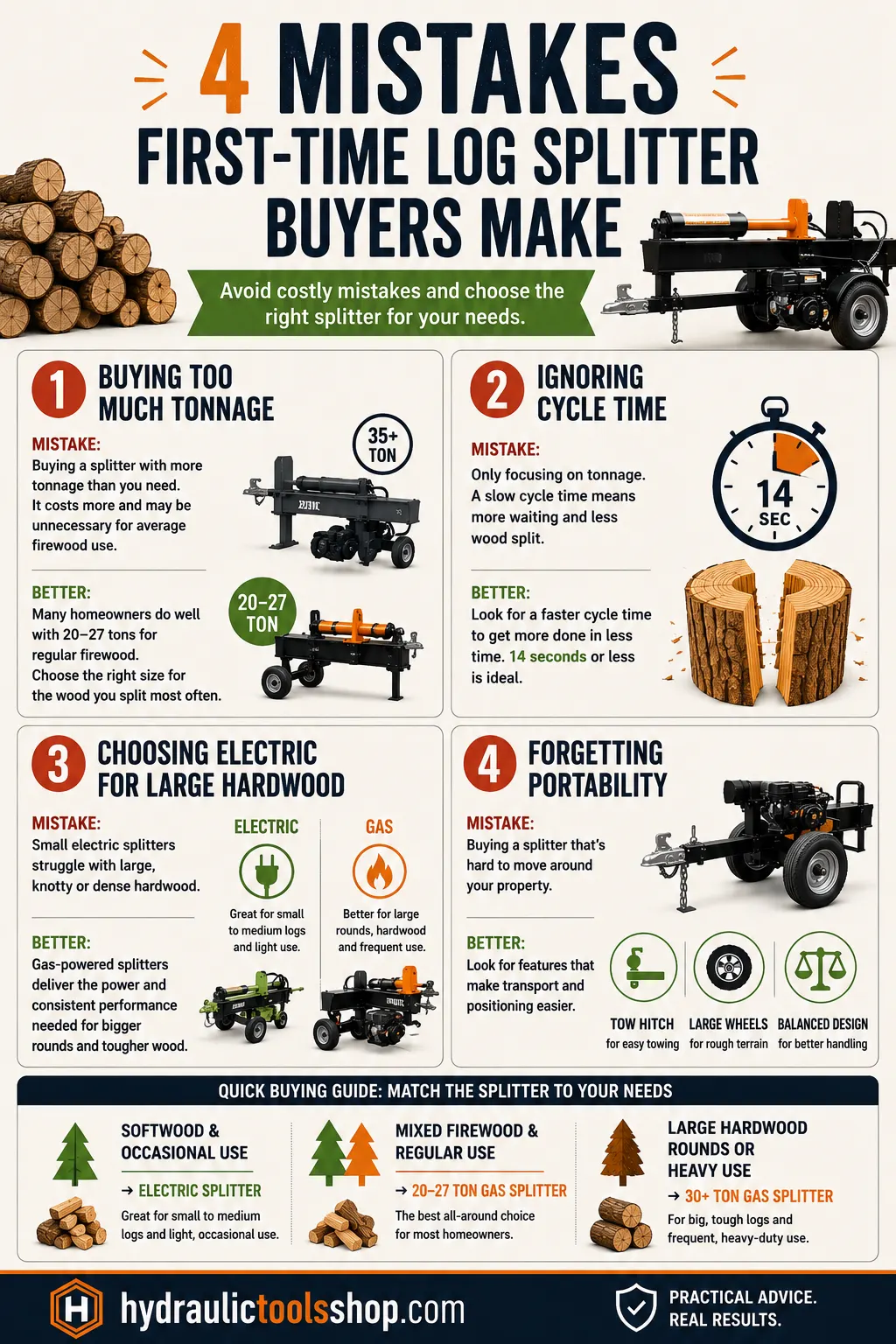
The Three Types at a Glance
Electric — 6 to 10 ton: Quiet, low maintenance, runs on a standard 110V outlet. Best for softwood and suburban use. Struggles with dense hardwood above 10 inches diameter.
Gas — 20 to 25 ton: Handles any wood species at any volume. No outlet needed — works anywhere. Loud, requires seasonal maintenance and fuel storage. The right tool for serious firewood production.
Manual — 1 to 5 ton: Silent, portable, zero maintenance. Suitable for kindling and small softwood rounds only. Not a substitute for a powered splitter on anything above a quarter cord per season.
The number that decides which type you need is not the price — it is the wood species and log diameter you are actually splitting.
Before You Buy — Five Questions to Answer First
Answer every question before placing an order
Seasonal Timing — The Mistake Nobody Talks About
For anyone buying a log splitter primarily for winter firewood production, the ideal purchase window is February to April. Inventory is available, delivery is fast, and there is time to split and season wood before the following winter. Buying in September or October means competing with peak demand and burning unseasoned wood that produces less heat and more creosote buildup.
Safety Rules for Log Splitters
A log splitter generates serious force. These rules are not optional.
Hank's Log Splitter Reviews — Find the Right Machine for Your Wood
The posts below cover individual log splitter models in full detail — tonnage, cycle time, engine specs, owner report analysis, and Hank's specific recommendation for each use case. Use the comparison table above to identify which type fits your situation, then read the relevant review before buying.
Frequently Asked Questions

20+ Years Experience • Hydraulics and Heavy Equipment
Hank Miller
Born in Ohio's Rust Belt. Two decades fixing trucks and heavy gear taught me one thing — good tools keep you safe, bad ones cost you time and money. I gather intel from fellow mechanics, dig into owner data, and make the call so you know exactly what you are buying. Read Hank's full story.