Last updated: May 2026
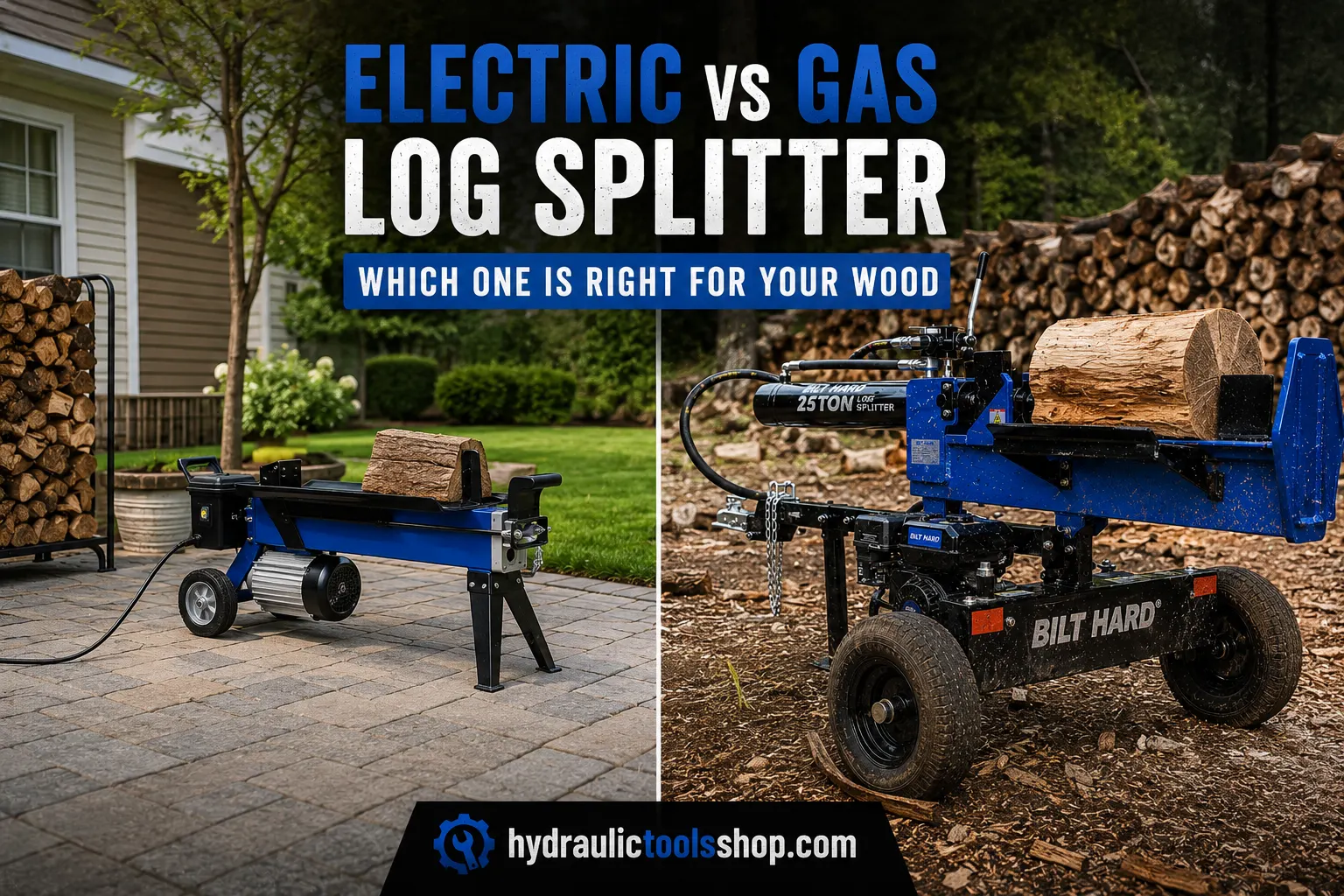
Electric vs Gas Log Splitter: Which One Is Right for Your Wood
Log Splitter Comparison • Electric vs Gas • Tonnage, Noise, Maintenance • Hank Miller
Most people buying their first log splitter spend time comparing brands and models when the more useful question comes earlier. Electric or gas — that decision changes everything downstream. The wrong type for your wood and your property means the machine works fine and still fails you on the day you actually need it. This page settles that question before you look at a single model.
Choose Electric if:
- Your wood is primarily softwood — pine, fir, cedar, spruce
- You have a convenient outdoor outlet where you split
- Noise is a genuine constraint — neighbours, early mornings, local rules
- You split occasionally and want very low maintenance between sessions
- Your logs are generally under 10 inches diameter
Choose Gas if:
- Your wood includes oak, hickory, or dense mixed hardwood
- You split on a rural property without convenient power access
- Your logs regularly exceed 10 inches diameter
- You process multiple cords per season and need sustained output
- Green wood is part of your regular splitting load
The Core Difference — It Is About the Wood, Not the Machine
Electric and gas log splitters do the same job through the same mechanism — hydraulic pressure driving a wedge through wood. The difference is where the hydraulic pressure comes from and how much of it the machine can generate.
An electric splitter uses a motor to drive the hydraulic pump. The motor is limited by the electrical supply — typically 120V household current — which caps the hydraulic pressure and therefore the splitting force. Most electric home garage splitters land in the 6 to 10-ton range.
A gas splitter uses a combustion engine to drive the pump. The engine is not constrained by an electrical supply. Most gas home garage splitters land in the 20 to 25-ton range — three to four times the force of a comparable electric unit.
That force difference is the only thing that matters for the type decision. Every other consideration — noise, maintenance, portability, price — is secondary to whether the machine generates enough force for the wood you actually split.
Tonnage — The Number That Decides the Type
What tonnage actually means
Tonnage is the force the wedge applies to the wood. Higher tonnage handles denser wood, larger diameter rounds, and green wood that has not dried. Lower tonnage is sufficient for dry softwood in manageable diameters.
6 to 10 ton electric: handles seasoned softwood up to around 9 to 10 inches diameter in most conditions. Struggles on dense hardwood above 8 inches and on green wood of any species above modest diameters.
20 to 25 ton gas: handles most residential hardwood splitting situations including oak, hickory, and large diameter rounds. Green wood of most species falls within the capacity range.
The mistake is buying for the easy logs and discovering the machine cannot handle the difficult ones. Know the hardest wood you will regularly split — that determines the minimum tonnage you need.
Wood Type — The Deciding Factor
Two pieces of wood the same size can require completely different splitting force. A 10-inch round of dry pine splits easily at 6 to 8 tons. A 10-inch round of green oak may need 20 tons or more.
Softwood — pine, fir, spruce, cedar: Electric covers this reliably in dry, seasoned condition up to 9 to 10 inches diameter.
Light hardwood — dry ash, dry maple: Electric manages in straight-grained, well-seasoned condition at smaller diameters. Knotty pieces of the same species may be at the edge of the electric capacity range.
Dense hardwood — oak, hickory: Gas is the appropriate category. Electric units in the 6 to 10-ton range are generally not suited to dense hardwood splitting on a regular basis.
Green wood often requires noticeably more force than seasoned wood of the same species, especially in dense hardwoods. If your wood source includes freshly felled material, size the machine for that reality rather than for dry seasoned rounds.
Noise and Location — A Real Constraint for Many Buyers
A gas log splitter runs at approximately 85 to 95 decibels at the operator position — comparable to a lawn mower, but with a hydraulic pump rhythm that carries differently. For rural properties this is generally not a concern during daylight hours. For suburban settings where neighbours are within easy earshot, the noise level is a genuine operational constraint.
An electric log splitter produces motor noise — quieter than gas, without the combustion note. In a suburban backyard on a weekday morning it is significantly less intrusive. Some buyers in close suburban settings specifically choose electric not because of the wood type but because of the noise situation. That is a legitimate reason.
Maintenance Reality
Electric maintenance: Hydraulic fluid level checks before each session. Keep the fluid clean and at the correct level — ISO 32 or AW32 grade. No fuel, no oil changes, no air filter, no spark plug. A well-maintained electric splitter stored correctly requires minimal attention between splitting sessions.
Gas maintenance: Engine oil changes on schedule — typically every 50 hours or at the start of each season. Air filter inspection. Spark plug check annually. Fuel stabiliser before any storage period over 30 days — stale fuel is the most common cause of starting problems after seasonal storage. The hydraulic system requires the same fluid checks as an electric unit, on top of the engine maintenance schedule.
For buyers who split infrequently and want a machine that sits unused for months between sessions with minimal preparation — electric is the lower-friction choice. For buyers who split regularly and are comfortable with seasonal small-engine maintenance — the gas maintenance schedule is manageable and familiar.
Full Comparison Table
| Feature | Electric | Gas |
|---|---|---|
| Typical force range | 6 to 10 ton | 20 to 25 ton |
| Power source | 120V outlet | Gasoline engine |
| Softwood performance | Strong | Strong |
| Dense hardwood | Limited | Strong |
| Green wood | Limited | Generally capable |
| Noise level | Quiet | Loud |
| Indoor use | Safe with ventilation | Not safe — exhaust fumes |
| Maintenance | Low | Medium |
| Portability | Limited by cord | Fully portable |
| Price range | $150 to $500 | $700 to $1,500 |
| Best for | Suburban, softwood, occasional | Rural, hardwood, high volume |
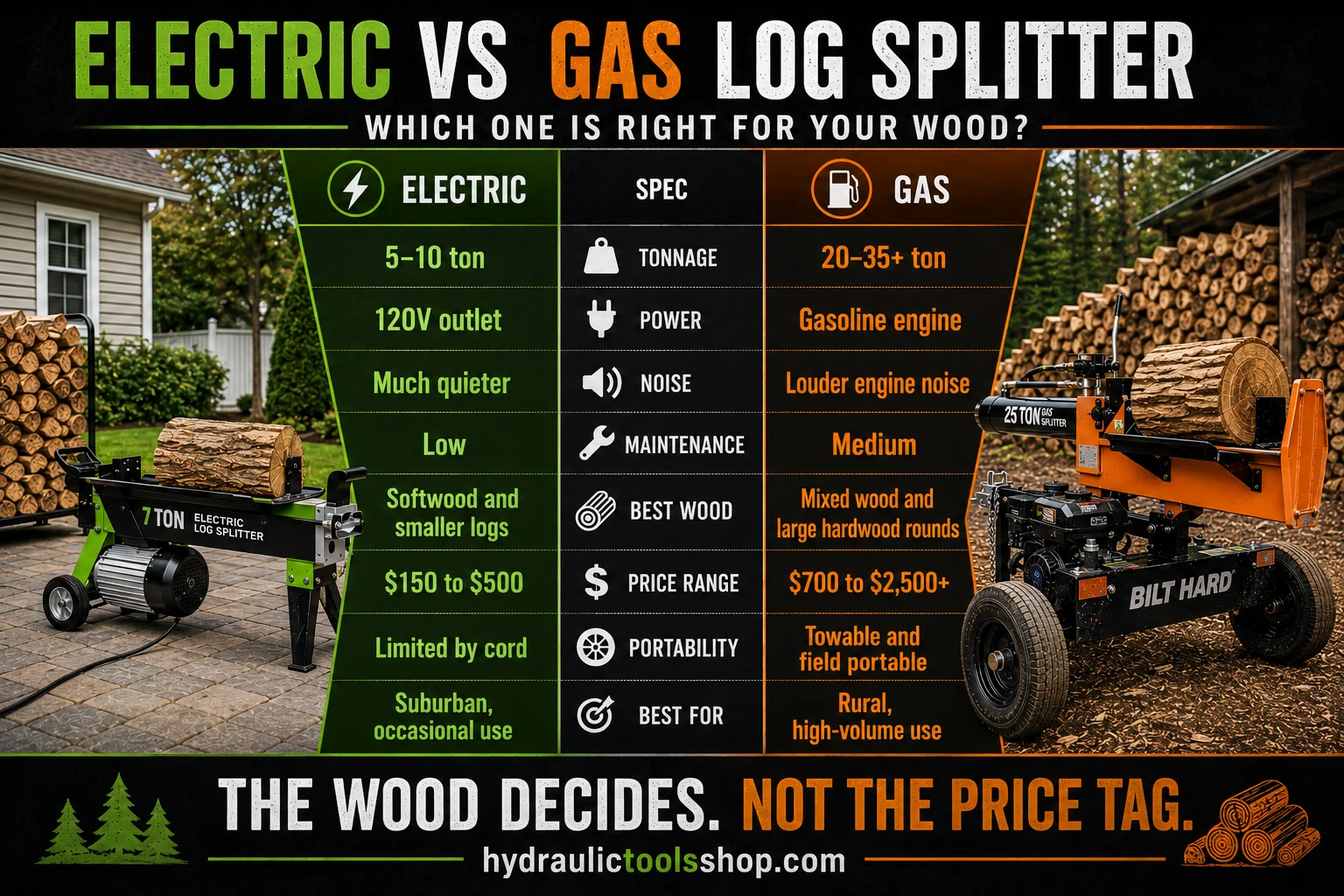
Visual Comparison
Reading the Comparison
The infographic shows the key specs side by side. The most important column is the tonnage range — that single number determines whether a machine can handle your wood or not.
Price range is shown for reference but should not be the primary decision driver. Buying the cheaper electric option for wood that needs gas tonnage means buying the wrong tool twice — once now and again when you replace it.
The best use case column at the bottom is the practical summary. If your situation matches the electric column, buy electric. If it matches the gas column, buy gas. If it sits across both — size for the hardest wood you regularly split.
Which Wins — By Specific Scenario
Electric is the right call when:
- You have a fireplace or fire pit burning primarily softwood from a known source
- You split a quarter to half cord per season on an occasional schedule
- Your garage or backyard has an outdoor outlet within cord range
- Noise is a genuine constraint at your property
- You want the machine to sit unused for months without preparation before the next session
- Your logs are consistently under 10 inches diameter
Gas is the right call when:
- You split oak, hickory, elm, or any dense mixed hardwood regularly
- Your property has no convenient outdoor power access
- You process more than half a cord per season on a sustained schedule
- Your logs include large diameter rounds above 12 inches consistently
- Green wood is part of your regular splitting load
- You need to split in multiple locations and cannot run a cord
Log Splitter Reviews on This Site
- BILT HARD 6.5-Ton Electric — popular homeowner electric option, softwood and light hardwood
- WEN 56208 6.5-Ton Electric — includes 34-inch stand, good for standing-height operation
- Sun Joe LJ10M 10-Ton Manual — no power source needed, compact storage, light softwood use
- SuperHandy 25-Ton Gas — horizontal and vertical operation, well-regarded at this price point
- BILT HARD 25-Ton Gas — 8HP engine, 8-inch hardened wedge, horizontal and vertical operation
Frequently Asked Questions
Sources and transparency: Tonnage and performance information based on manufacturer specifications for the five log splitters reviewed on this site. Wood species density and splitting force guidance referenced against US Forest Service Forest Products Laboratory data. Safety guidance referenced against OSHA standards. No affiliate links on this page.
Written for HydraulicToolsShop.com by Hank Miller. Updated using owner feedback and product spec changes. Hank’s background in hydraulic equipment informs the analysis — see the about page for full credentials.

20+ Years • Hydraulics and Heavy Equipment
Hank Miller
Born in Ohio’s Rust Belt. Two decades fixing trucks and heavy gear taught me one thing — good tools keep you safe, bad ones cost you time. I dig into owner data and make the call so you know exactly what you are buying. Read Hank’s full story.