Last updated: May 2026
This page contains affiliate links. As an Amazon Associate, HydraulicToolsShop.com earns from qualifying purchases at no extra cost to you.
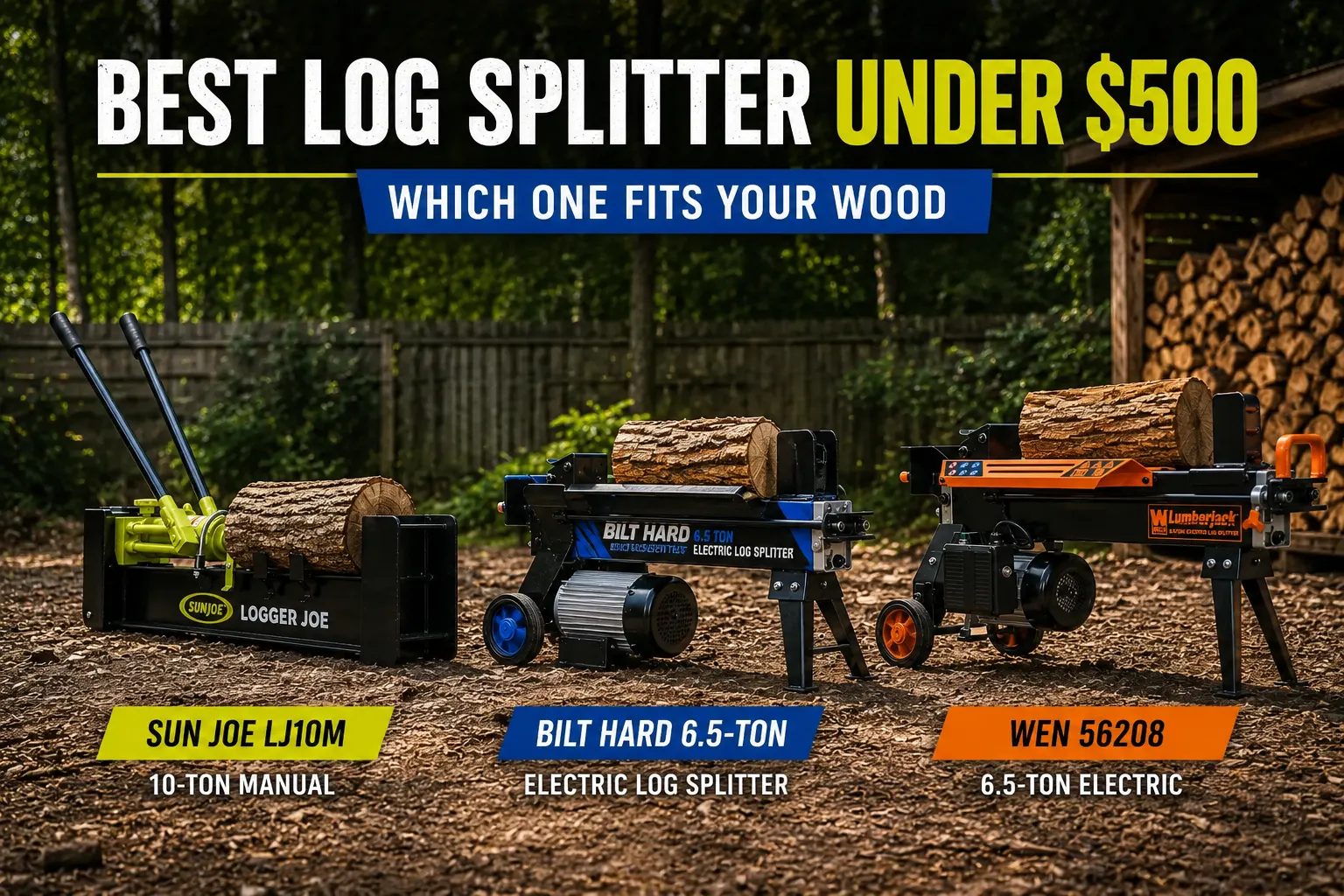
Best Log Splitter Under $500: Three Options Worth Considering
Log Splitter Roundup • Budget Options • Electric and Manual • Hank Miller
Three log splitters sit in the budget range and all three are worth considering — but for very different situations. The right one depends on your wood type, your property, and how you split. Here is the short version before the full breakdown.
| Pick | Product | Force | Best For | Score | Link |
|---|---|---|---|---|---|
| Best Overall | WEN 56208 | 6.5 ton electric | Suburban softwood, standing height | 7.9 | Amazon |
| Best Value | BILT HARD 6.5-ton | 6.5 ton electric | Suburban softwood, ground level | 7.8 | Amazon |
| No Power Needed | Sun Joe LJ10M | 10 ton manual | Off-grid, no outlet, light softwood | 7.4 | Amazon |
Scores consider ease of use, splitting versatility, maintenance requirements, owner feedback patterns and value for money.
Who This Roundup Is For
The budget log splitter category covers homeowners who split softwood for a fireplace, fire pit, or wood stove on an occasional schedule. These machines are not designed for sustained hardwood production — that is a gas splitter job at a higher price point.
If your wood is primarily pine, fir, cedar, spruce, or dry ash in manageable diameter rounds — one of these three covers the job without the cost and maintenance of a gas unit. If your wood regularly includes oak, hickory, or green hardwood above 8 inches diameter — the SuperHandy 25-ton gas or the BILT HARD 25-ton gas are the appropriate category.
1. WEN 56208 — Best Overall Pick
WEN 56208 6.5-Ton Electric Log Splitter
Best Overall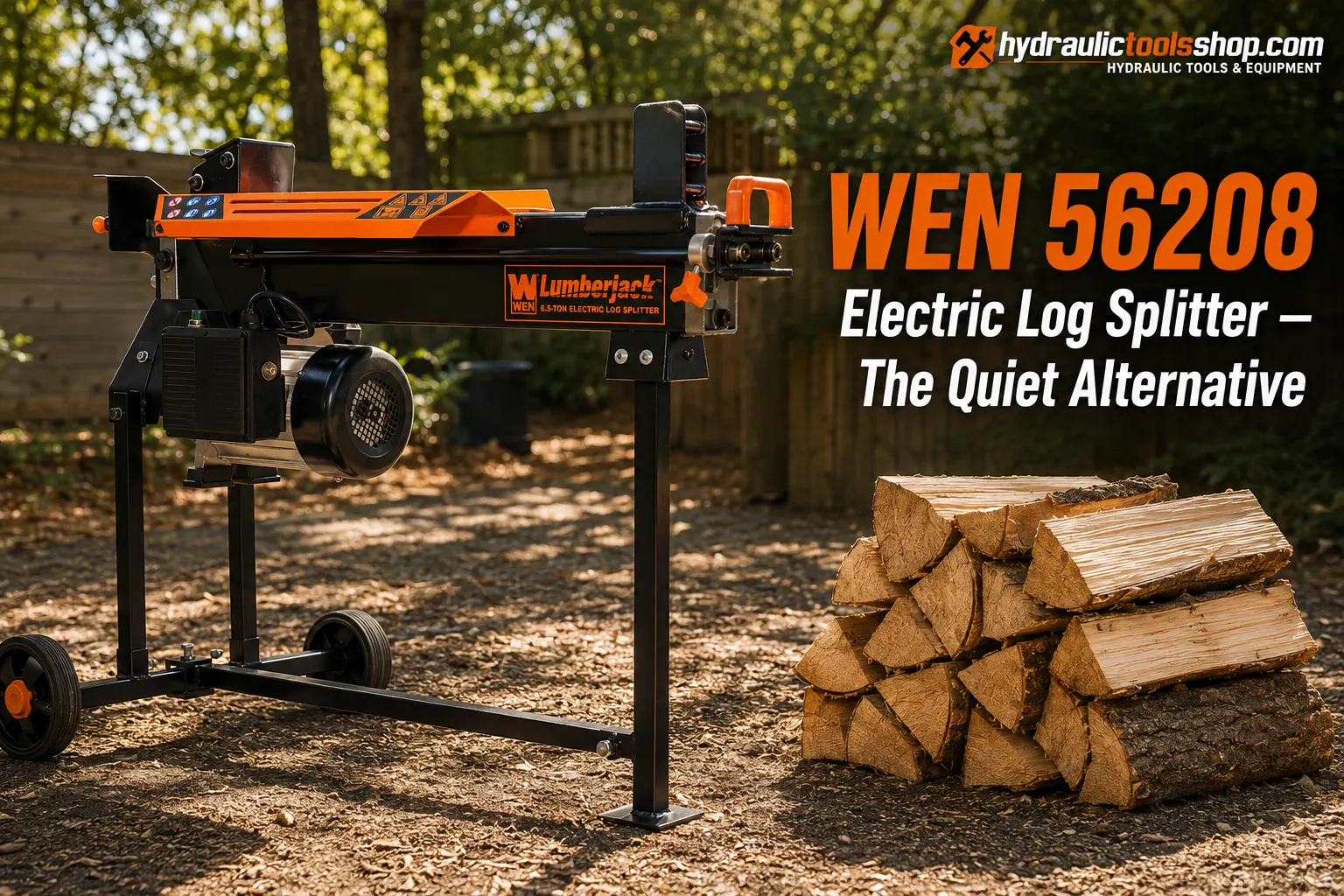
The WEN edges ahead of the BILT HARD as the best overall pick in this category for one reason — it includes a 34-inch stand as standard equipment. For anyone splitting at standing height rather than ground level, that inclusion changes the working experience over a full session. Same tonnage as the BILT HARD, slightly wider log diameter limit at 10 inches, and a modest price premium that is offset by the stand value.
Check Price on Amazon
2. BILT HARD 6.5-Ton — Best Value
BILT HARD 6.5-Ton Electric Log Splitter
Best Value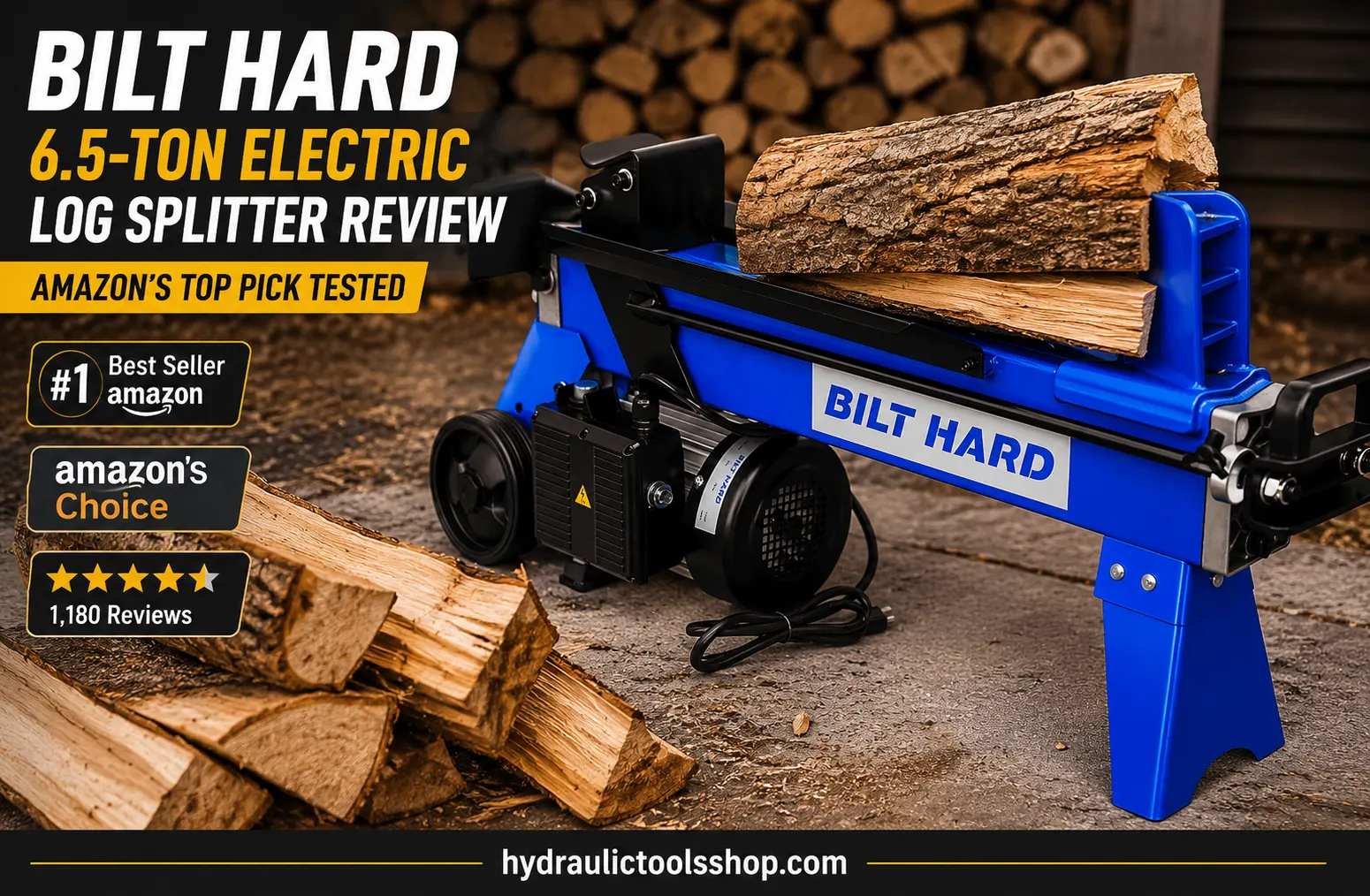
The BILT HARD 6.5-ton is a widely purchased electric splitter in this category. It splits softwood cleanly up to 9.8 inches diameter, cycles in approximately 18 seconds, and runs on a standard 120V outlet. No stand included — it operates at ground level. The price is lower than the WEN and the performance on softwood is comparable. For buyers who split at ground level and want the most straightforward entry into electric splitting, this is the practical value choice.
Check Price on Amazon
3. Sun Joe LJ10M — No Power Needed
Sun Joe LJ10M 10-Ton Manual Hydraulic Log Splitter
No Power Needed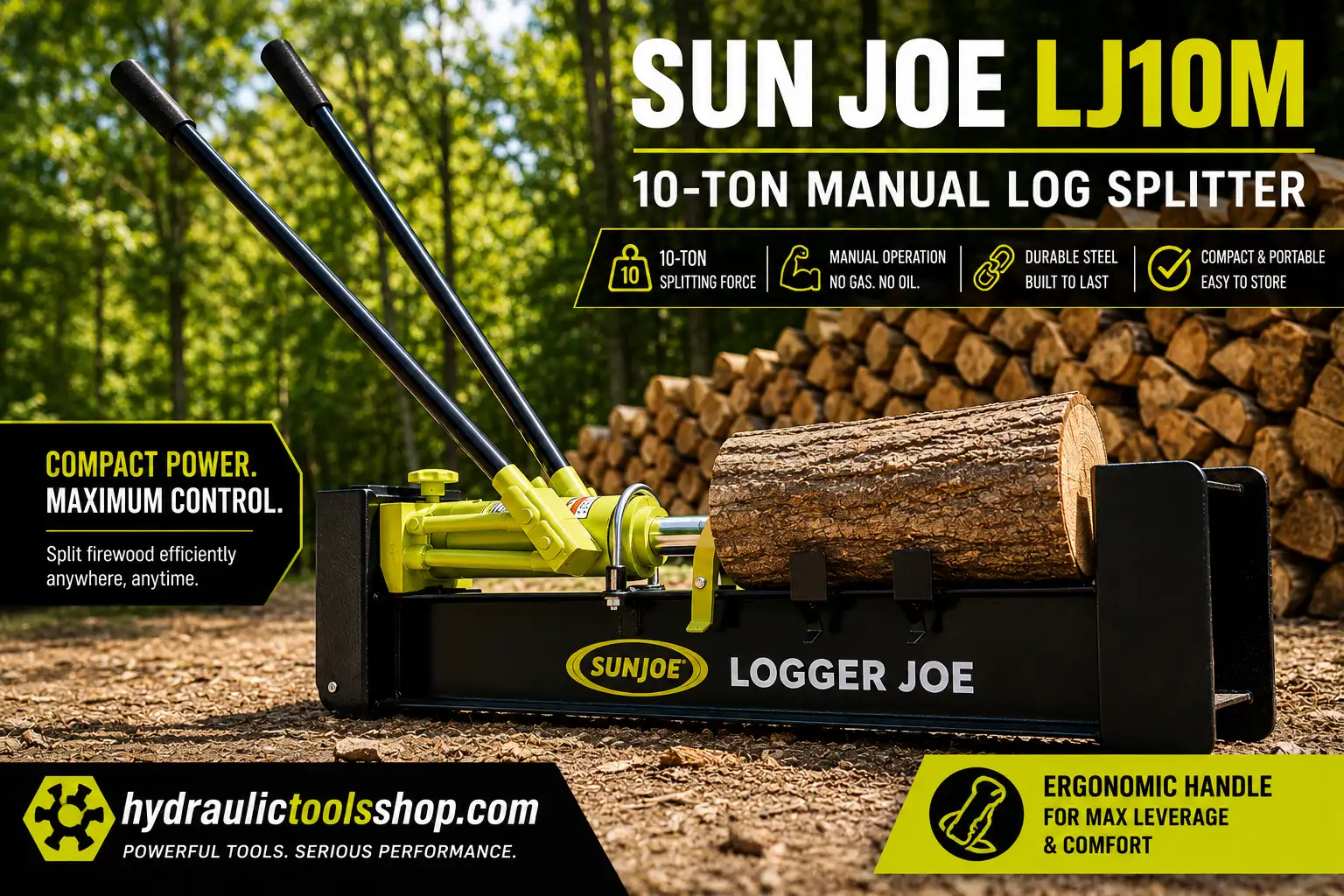
The Sun Joe LJ10M is the right choice for one specific situation — splitting softwood where no outdoor outlet is available. Off-grid properties, cabins, locations without convenient power access, or buyers who want a machine that stores in a corner for months without any maintenance preparation. The 10-ton manual rating generates real hydraulic force through a 2-speed pump. The trade-off is operator effort per cycle — each split requires manual pumping rather than a motor doing the work.
Check Price on Amazon
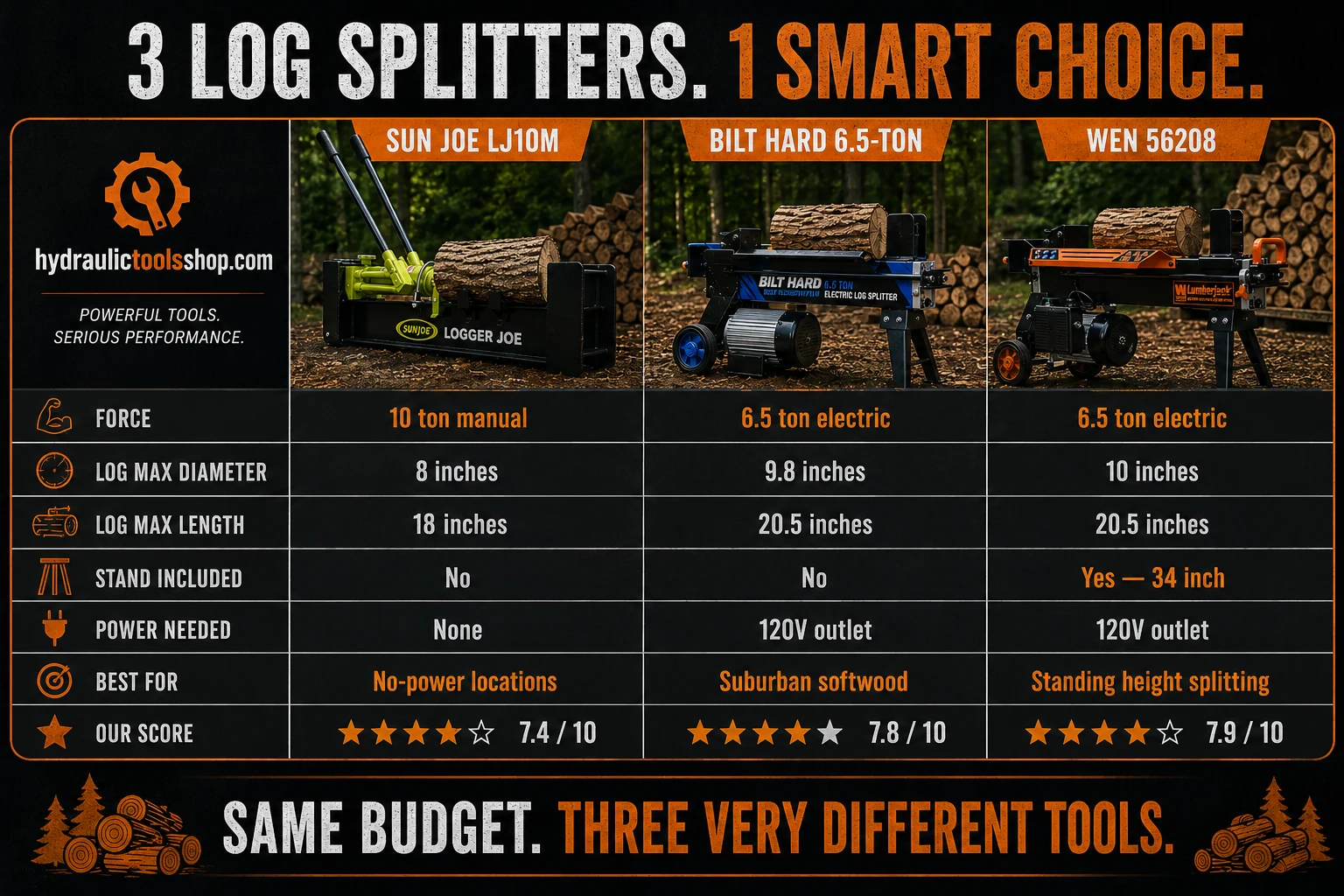
Side by Side Comparison
Reading the Numbers
The tonnage column shows the key difference between manual and electric in this budget range. The Sun Joe generates more rated force — 10 tons versus 6.5 — but requires operator effort on every cycle. The electric units generate their force automatically with a motor.
The stand row is the practical differentiator between the WEN and BILT HARD. Both perform similarly on softwood in typical homeowner use. The stand changes the working height and the physical experience of a full splitting session.
The power column determines the type decision before anything else. If you have an outlet — electric is generally the more practical daily tool. If you do not — the Sun Joe is the only option in this budget range.
How to Choose Between These Three
| Feature | WEN 56208 | BILT HARD 6.5-ton | Sun Joe LJ10M |
|---|---|---|---|
| Splitting force | 6.5 ton electric | 6.5 ton electric | 10 ton manual |
| Max log diameter | 10 inches | 9.8 inches | 8 inches |
| Max log length | 20.5 inches | 20.5 inches | 18 inches |
| Stand included | Yes — 34 inch | No | No |
| Power required | 120V outlet | 120V outlet | None |
| Operator effort | Minimal | Minimal | Manual pump per cycle |
| Noise level | Quiet motor | Quiet motor | Very quiet |
| Maintenance | Low | Low | Very low |
| Our score | 7.9 / 10 | 7.8 / 10 | 7.4 / 10 |
Frequently Asked Questions
Sources and transparency: Specifications verified against individual product listings. Performance assessments based on published capacity specifications and aggregated owner report patterns — not controlled lab testing. Amazon Associate links used — commissions support this site at no extra cost to you.
Reviewed for HydraulicToolsShop.com by Hank Miller. Updated using owner feedback and product spec changes. See the about page for full credentials.

Hydraulics and Heavy Equipment
Hank Miller
Born in Ohio’s Rust Belt. Two decades fixing trucks and heavy gear taught me one thing — good tools keep you safe, bad ones cost you time. I dig into owner data and make the call so you know exactly what you are buying. Read Hank’s full story.